The Self-Contained Empire: How America's Wealthiest Are Engineering Personal Economies That Transcend Market Cycles
For decades, the accepted architecture of great wealth rested on a familiar foundation: diversified portfolios, institutional asset managers, and exposure to the rhythms of public markets. The logic was sound, and for most investors, it remains entirely adequate. But among the uppermost tier of American wealth—those for whom capital preservation across generations is not merely a goal but an obligation—a fundamentally different framework is taking hold.
Call it economic sovereignty. At its core, the concept is straightforward: rather than positioning wealth within existing economic systems, the most forward-thinking ultra-high-net-worth individuals are building systems of their own.
The Limits of Conventional Positioning
Public markets, for all their liquidity and accessibility, carry an inherent vulnerability: they are collective instruments. Their performance is inseparable from the behavior of millions of participants, the decisions of central banks, the unpredictability of geopolitical events, and the legislative priorities of administrations that change every four to eight years. For investors managing nine-figure and ten-figure portfolios, this interdependence is not merely inconvenient—it is a structural risk that compounds over generational timelines.
The 2008 financial crisis, the volatility of 2020, and the inflationary disruptions of 2022 each reinforced a lesson that sophisticated wealth stewards had long suspected: exposure to public systems means exposure to public fragilities. The response, among those with sufficient resources to act on it, has been to reduce that exposure systematically and replace it with something more durable.
Vertical Integration as Wealth Architecture
The mechanism through which economic sovereignty is achieved is vertical integration—the deliberate construction of supply chains, production capabilities, and infrastructure that a private entity controls from origin to output. In the corporate world, vertical integration is a competitive strategy. Among ultra-wealthy individuals and family offices, it is becoming a wealth preservation strategy.
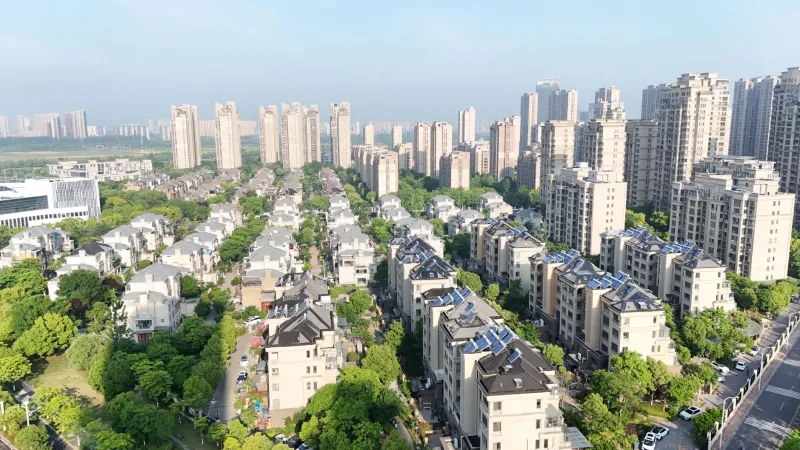
Consider the domain of energy. A number of prominent American wealth holders have made substantial investments in private utility infrastructure: solar arrays, wind installations, battery storage systems, and in some cases, micro-grid technology that allows their properties and business operations to function entirely off the public grid. The economics are compelling on their own terms, but the strategic value extends far beyond cost savings. Energy independence insulates an enterprise from utility rate volatility, grid instability, and the policy uncertainty that surrounds public energy markets.
Similarly, private food systems have attracted serious capital from the ultra-wealthy cohort. Investments in regenerative farmland, controlled-environment agriculture facilities, and proprietary distribution networks have allowed certain family offices to construct what might reasonably be described as personal food supply chains. These are not hobby farms or lifestyle properties—they are operationally serious enterprises capable of supplying not only the family's own needs but generating commercial revenue streams in parallel.
The Manufacturing Dimension
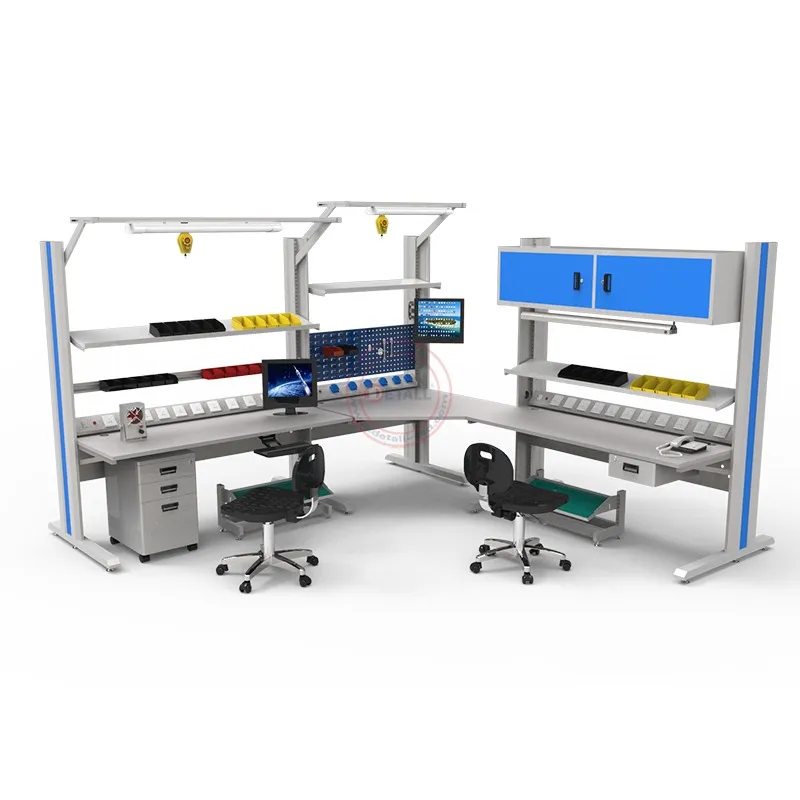
Perhaps the most ambitious expression of economic sovereignty involves private manufacturing capacity. Several notable American wealth holders have invested in small-scale but highly capable manufacturing facilities—advanced fabrication shops, precision machining operations, and materials processing plants—that serve both their own enterprise needs and external clients.
The rationale is layered. On one level, owning manufacturing capability reduces dependence on external suppliers whose reliability is subject to forces entirely outside the investor's control—as the supply chain disruptions of 2020 and 2021 demonstrated with painful clarity. On another level, proprietary manufacturing creates a platform for product development and commercialization that public market exposure simply cannot replicate.
This is vertical integration in its most literal sense: the wealthy individual does not merely own equity in companies that make things—they own the means of production directly, within structures that report to no shareholders, no quarterly earnings cycle, and no analyst community.
Technology as the Connective Tissue
What makes the modern economic sovereignty playbook viable in ways it was not a generation ago is the accessibility of sophisticated technology. Private cloud infrastructure, proprietary data systems, and enterprise-grade software platforms can now be assembled and operated at a scale that suits a large family office rather than a Fortune 500 corporation. This allows the self-contained economic empire to function with a degree of operational intelligence and efficiency that was previously available only to much larger institutions.
Several family offices have gone further, developing proprietary technology platforms that began as internal tools and subsequently attracted outside interest—generating licensing revenue or venture investment that effectively monetized the operational infrastructure itself. This pattern—internal capability becoming external asset—represents one of the more elegant features of the economic sovereignty model.
The Generational Calculus
The appeal of this approach is perhaps most clearly understood through a generational lens. A diversified portfolio of publicly traded securities is, by definition, a claim on the future performance of systems controlled by others. Its value rises and falls with conditions its owner cannot influence. A self-contained economic ecosystem, by contrast, is a productive asset base whose output is governed by decisions made within the family structure itself.
For patriarchs and matriarchs thinking in thirty- and fifty-year timeframes, that distinction is not trivial. It is the difference between inheriting a position and inheriting a capability—between passing on wealth as a number on a statement and passing on wealth as a functioning, generative enterprise that the next generation can operate, expand, and adapt.
This is why leading advisors to ultra-high-net-worth families increasingly speak of economic sovereignty not as an investment strategy but as a legacy architecture. The goal is not merely to preserve capital across market cycles; it is to build something that remains productive regardless of what markets do.
Considerations for Implementation
The path toward economic sovereignty is neither simple nor universally appropriate. It demands significant capital commitment, operational expertise, and a willingness to accept illiquidity in exchange for control. The infrastructure required—energy systems, food production, manufacturing capacity, proprietary technology—carries real development costs and ongoing management complexity.
For those with the resources and the long-horizon orientation to pursue it, however, the strategic logic is compelling. The most resilient wealth structures in American history have not been those most elegantly positioned within existing systems—they have been those that built systems of their own.
At Billionaire Club Co, we observe this shift with considerable interest. The members and prospective members we serve are precisely the individuals for whom the question of economic sovereignty is not theoretical but operational. The construction of a self-sufficient enterprise ecosystem is among the most demanding undertakings in private wealth management—and, for those who execute it well, among the most enduring.